
Tearing down a building in Camden County means answering to more than one set of rules. A cottage on a St. Marys side street, a mobile home on family land outside Woodbine, a storm-battered house on a marsh-front lot near Harrietts Bluff and an aging commercial building along the Kingsland corridor can each fall under a different permit office, and some also need a state notice, a historic review or a coastal check before any wall comes down. Arwood Disposal plans demolition and debris removal across Kingsland, St. Marys, Woodbine and the unincorporated county, and we stay on the job until the final load of debris has left the lot. Work is scheduled from our headquarters at 16144 Main St N, Jacksonville, FL 32218, just south of the state line; we keep no office in Camden County. Reach us at (855) 713-6280 or [email protected] with the site address and some photos, and call for a quote, because every teardown is priced on its own details.
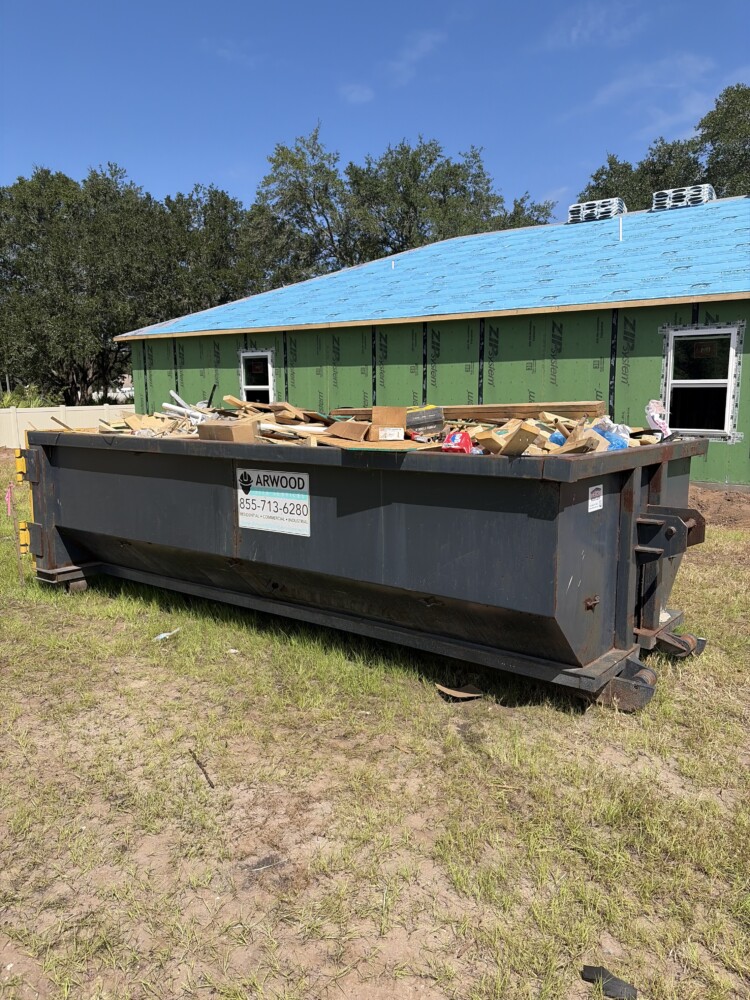
Four permit offices for one county
Camden County has three incorporated cities, and each of them handles its own building permits. The parcel’s location, not the mailing address, decides where a demolition permit comes from, so confirm it before anyone fills out an application.
Unincorporated Camden County
For land outside the three cities, the Camden County Planning and Development Department at 135 Gross Road in Kingsland is the permit office (912-729-5603, [email protected], weekdays from 8 a.m. to 5 p.m.). Its online portal takes demolition permit applications alongside building, manufactured home and pool permits. The department says it reviews every application before it accepts payment and asks applicants to allow up to seven business days for an emailed status reply. A permit is not considered valid until the fees are paid and a current Georgia business license is on file, and inspections have to be requested at least 24 hours ahead. The county is also clear that it issues nothing for Kingsland, St. Marys or Woodbine.
City of Kingsland
Inside Kingsland, demolition permits run through the Housing and Development Department at 105 S. Lee Street, where the building official and the city’s building inspector (912-729-8296) are based. The department also verifies contractor licensing. Kingsland’s zoning ordinance lists demolition as its own permit type in the building fee schedule, and the same section doubles every fee when work starts before the permit is issued, so pulling the permit first is the cheaper path.
City of St. Marys
The St. Marys Building Department at 418 Osborne Street states that a permit is needed for demolition, house moving and manufactured homes as well as new construction. The builder buys the permit and books the inspections, and since January 2024 both happen through the city’s Cloudpermit system, with inspection requests due by 2 p.m. on the day before. Contractors also have to give the department a copy of their occupational tax license before a permit is issued. The permit technician can be reached at 912-510-4019.
City of Woodbine
Woodbine, the county seat, keeps its own building permits and code enforcement at City Hall, 310 Bedell Avenue (912-576-3211), and posts its building permit application and residential instructions on the city website. A Woodbine address inside the city limits goes there, not to the county office on Gross Road.
Historic St. Marys: when the commission decides
Owners in the St. Marys Historic District face an extra step that can reshape the whole schedule. The city requires a Certificate of Appropriateness for the demolition or relocation of any building or structure in the district, and the Historic Preservation Commission reviews those requests at its monthly meeting, held on the fourth Tuesday at 5:30 p.m. in the City Hall council chambers. Applications are filed through Cloudpermit.
For a building the city rates as historic or historic-obscured, Chapter 62 of the city code sets a demanding process:
- A stamped report from a Georgia-licensed professional engineer on the building’s structural soundness and whether it could be renovated or restored, along with an appraisal, the owner’s financial details for the property and a landscape plan showing the larger trees.
- Two hearings: the first decides whether the building may come down at all, and only then does a second hearing review the plans for what will replace it. The commission may require a bond to make sure the replacement is completed.
- A building approved for demolition must be dismantled in a way that reclaims its historic materials, and the certificate is subject to a 12-month delay before removal.
Buildings rated nonhistoric, or classed as intrusions, follow a different section of the code. In either case, the city also requires a certificate before healthy trees of 10 inches or more in diameter are removed, which matters when equipment needs room to work. If your property is in the district, call the community development office before you sign a contract for anything, including ours.
The state notice and the locate ticket
Georgia EPD’s demolition notification
Georgia’s Environmental Protection Division, through its Lead-Based Paint and Asbestos Program, treats demolition as a notice-first activity. The owner or operator must first have the building inspected for friable and non-friable asbestos. A demolition project notification then has to reach EPD at least 10 working days, Monday through Friday, before the work begins, whether or not any asbestos was found. EPD counts the postmark date as day one, and a weekend postmark starts the count on the following Monday. Any regulated asbestos has to be abated before the demolition by a Georgia-licensed abatement contractor under a separate notification. When the inspection finds none, the building owner or the demolition contractor can file the demolition notice.
Many single homes are exempt. EPD says that owners of residences with four or fewer dwelling units do not have to notify, unless the teardown is part of a larger project such as a road job, a commercial or industrial development or urban renewal. Several houses at one location, under the same owner and torn down in the same planning period, count as one project and do need notice. EPD also defines the intentional burning of a structure as a demolition.
Georgia 811 before the machine arrives
The Georgia Utility Facility Protection Act covers more than trenching. The Georgia 811 excavator manual says the law requires a locate request whenever demolition is to occur, whenever mechanized equipment will dig, and whenever work will bring people or equipment within 10 feet of overhead power lines, even on private property. Submit the ticket at least three business days ahead; business hours for tickets run from 7 a.m. to 4:30 p.m. on weekdays, and anything entered later counts as the next business day. Before work starts, the excavator is expected to check the positive response system to confirm each utility has answered. A normal ticket is good for 30 calendar days after its effective date, and a longer job needs a fresh request.
Utilities, septic tanks and private wells
Schedule the shutoffs while the permits are in review. Ask the electric provider to remove the meter and drop the service, have propane tanks picked up by the supplier, and arrange for city water and sewer accounts in Kingsland, St. Marys or Woodbine to be closed and the lines capped. Outside the cities, two more items often come up.
- Septic tanks. Onsite sewage in the county is handled by Camden County Environmental Health, part of the Georgia Coastal Health District, at 107 North Gross Road, Suite 4, in Kingsland (912-729-6012). Georgia’s onsite sewage rule, 511-3-1-.17, gives an owner two choices when a tank goes out of use: have it pumped by a certified pumper and fill it with sand, soil or rock so no one can fall in, or have the empty tank removed to make room for a new system component. Ask the office which applies before the replacement home is designed.
- Private wells. Georgia’s water well standards make the present owner responsible for filling, sealing and plugging an abandoned well, and that work must be done by a water well contractor licensed by the state council. Under O.C.G.A. 12-5-134, a well unused for more than three years is considered permanently abandoned; one idle for one to three years must at least be sealed and kept from becoming a path for contamination.
Waterfront and marsh-edge lots
A large part of eastern Camden County borders tidal marsh, and coastal property brings in the Georgia Department of Natural Resources Coastal Resources Division. Under the Coastal Marshlands Protection Act of 1970 and the Shore Protection Act of 1979, the division asks anyone near salt marsh or the beach who is planning to clear land or build to get a current jurisdictional determination. Staff can flag the marsh-upland boundary on site, and the determination is generally good for one year. The division’s Brunswick office is at One Conservation Way (912-264-7218). For a teardown on one of these lots, we plan the roll-off pad, the truck path and the debris stockpile on high, firm ground, well back from the marsh edge.
Demolition work we plan in Camden County
Our demolition contractor page lists the services we provide, and in this county they usually take these forms:
- Home and building removal, from an outdated house on a Kingsland lot to a commercial or industrial teardown, including clearing the slab when the new plans call for it.
- Storm and emergency cleanup. After a hurricane or a falling tree, we haul off wreckage and debris and can excavate the area so rebuilding can start.
- Driveway and concrete removal, cut and removed whole or in sections, with the broken concrete sent to a recycler that crushes it into aggregate.
- Pool removal, either draining and taking out part of the shell and filling the hole with dirt and gravel, or removing the entire pool.
- Interior demolition of a kitchen, bath or other room ahead of a renovation, with the materials recycled or disposed of properly.
When you call, mention any fuel tanks, drums or containers of chemicals, old siding or roofing that might be cement-based, or a building close to a property line. Those details change the order of the work and the paperwork.
Where Camden County demolition debris goes
Household curbside service will not take a demolition. The county’s residential collection rules keep construction debris, concrete, shingles, bricks and dirt out of the trash cart. The county’s own construction and demolition landfill, open since 2003, is the local destination for building rubble. It sits on Georgia Highway 110 at 1600 GA Hwy 110 with a Folkston mailing address, though it is inside unincorporated southwest Camden County, about 1.6 miles north of Highway 40. It accepts debris approved by EPD as construction and demolition waste, some pre-qualified industrial waste, and land-clearing debris cut to size: logs over 6 inches thick in 4-foot lengths without branches, branches over 4 inches thick in 8-foot lengths, and stumps with no more than a foot of trunk left on.
Every load must be tarped and strapped or it will be turned away, and disposal is charged by weight. Liquid waste, lead-acid batteries, petroleum products, pesticides and herbicides are refused, and liquid paint is not accepted, though dried paint is. Any waste containing asbestos has to be handled as asbestos-containing material and go to a permitted landfill. Rules and acceptance lists can change, so we check with the solid waste department (912-576-9374) before a load is hauled. On most jobs a roll-off is set beside the structure and swapped as it fills; see our roll-off dumpster rentals for sizes.
Burning the debris is not an option. Georgia EPD states that it is unlawful to burn man-made materials such as shingles, plastics, lumber and household garbage, even in a burn barrel. For permitted burns of vegetation only, Kingsland residents call City Hall at 912-729-5613, and those outside the city call the Georgia Forestry Commission at 912-576-5387.
Camden County demolition questions
My address says Kingsland, but I live outside the city. Who issues the demolition permit?
If the parcel is outside the city limits, the county’s Planning and Development Department on Gross Road issues it, even with a Kingsland mailing address. Inside the city, it comes from Kingsland Housing and Development. Check the parcel’s jurisdiction first, then apply.
Can I tear down an old house in the St. Marys Historic District?
Only with a Certificate of Appropriateness. For buildings rated historic or historic-obscured, expect an engineer’s report, two commission hearings, a requirement to salvage historic materials and a 12-month delay after approval. Start with the city’s community development office well before you set a date.
Do I need to notify Georgia EPD before demolishing my own single-family house?
Usually not. Residences with four or fewer units are exempt unless they are part of a larger project, or several buildings at one location are coming down together. Commercial and multi-building jobs need the notice at least 10 working days ahead, even with no asbestos present.
Can the old mobile home or barn be burned on the property?
No. Lumber, shingles, plastics and household trash are on the state’s list of materials that may never be burned, and EPD counts the intentional burning of a structure as a demolition. Haul it to the C&D landfill instead.
Do you have a yard or office in Camden County?
No. Camden County jobs are booked and dispatched from our Jacksonville headquarters on Main Street North, a short drive up I-95 across the St. Marys River.
Start your Camden County demolition plan
Send us the address or parcel number, which city or county office has jurisdiction, photos of each structure, a rough size, whether any building ever had a commercial use, and how the property gets power, water and sewer. We will lay out the order of permits, notices and shutoffs and set the debris haul-off around them. You can read more on our demolition contractor page, get a starting figure from the demolition quote calculator, or send details through our Contact form. You can also phone (855) 713-6280 or write to [email protected]. Call for a quote and compare it with others; as John Arwood likes to say, “If you don’t shop our prices, we both lose.” We work in all 50 states, with Northeast Florida and Southeast Georgia as our home market; the Locations page lists nearby areas, and the Arwood Disposal home page shows every service we offer.
More for Camden County: junk removal in Camden County empties furniture and appliances out of a building before it comes down, and portable toilet rental in Camden County gives the crew a restroom while the lot is cleared and the new building goes up.
Find Arwood Disposal on Facebook and LinkedIn.
Headquarters of Arwood Disposal: 16144 Main St N, Jacksonville, FL 32218 · Phone (855) 713-6280 · [email protected]